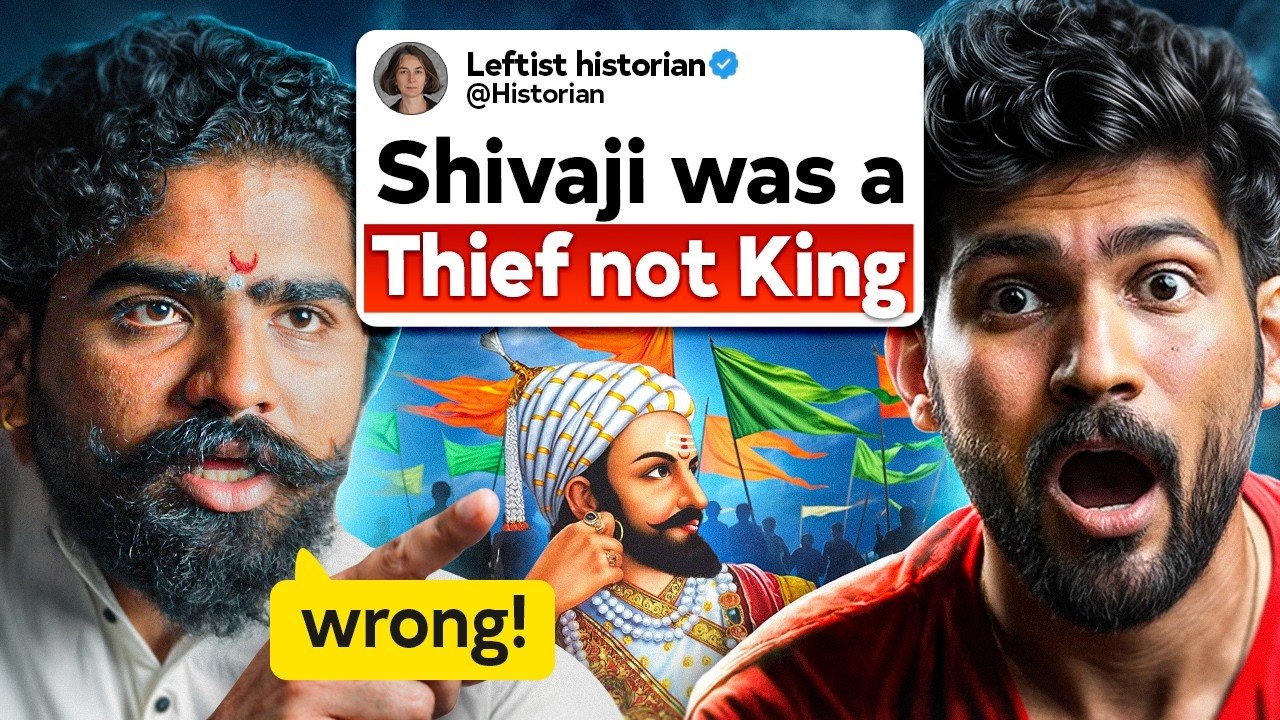
For too long, certain aspects of Chhatrapati Shivaji Maharaj’s history have been obscured, often twisted to fit convenient narratives. It is time to peel back the layers of propaganda and uncover the uncomfortable truths about one of India’s greatest kings. This article aims to address some persistent myths and clarify the profound difference between Chhatrapati Shivaji Maharaj and the invaders he fought.
Chhatrapati Shivaji Maharaj: Dharmnirpeksh, Not Modern Secular
One of the most debated questions revolves around whether Chhatrapati Shivaji Maharaj was a ‘secular’ king. The modern understanding of secularism often implies a complete separation of state and religion, or even a disregard for one’s own faith. However, Shivaji Maharaj was ‘Dharmnirpeksh’ – he upheld his Dharma (righteous duty and religion) with immense pride, while also respecting other faiths. This is a crucial distinction.
Consider his Council of Eight Ministers (Ashtpradhaan Mandal), which included a position for a ‘Dharmnyay Pandit’ or ‘Judge of Religious Law’. If Shivaji Maharaj were ‘secular’ in the modern sense, such a role would be contradictory. His era predated the modern Indian Constitution; nations then operated under religious law. As a Hindu king, Shivaji Maharaj naturally promoted Hinduism.
His actions further illustrate this. When Netoji Palkar, who had been forcibly converted to Islam by Aurangzeb, wished to return to Hinduism, Shivaji Maharaj facilitated his reconversion. He also broke down mosques that had been constructed over Shiva temples and converted mosques under Adil Shah’s control, such as those in Kalyan Bhivandi, into granaries, halting funds to Maulavis. Badi Begum herself expressed concern that Shivaji Maharaj’s growing kingdom posed a threat to Islam.
This does not mean Shivaji Maharaj hated other religions. His fight was rooted in humanity, which is also the foundation of Sanatan Dharma and Hindutva. He fought for justice and self-preservation, not religious hatred. The problem today is that ‘secularism’ is often used to suppress inconvenient historical truths, creating a false narrative of dialogue where none exists.
The Fundamental Difference: Mughals vs. Marathas
A common argument on the internet posits that Mughals and Marathas were essentially the same, both empire builders, with Mughals merely being more successful. This comparison fundamentally misrepresents history. The Mughals were invaders who came from foreign lands, subjugated local populations, and sought to impose their culture and religion through force, economic coercion (like the Jaziya tax), and destruction.
Aurangzeb, for instance, imposed the Jaziya tax so heavily that it forced non-Muslims into conversion by making their livelihoods untenable. His brutal destruction of temples, including the Kashi Vishwanath Temple, stands in stark contrast to the narratives propagated by some historians today. These acts were not random but deliberate strategies to destroy local culture and religion. The Mughals’ own chroniclers documented these conquests with pride.
Chhatrapati Shivaji Maharaj, on the other hand, fought for ‘Swarajya’ – self-rule, a kingdom of one’s own people. He was a defender, not an invader. He established an independent Maratha kingdom, not as a personal empire, but for the welfare and freedom of his people. His dream was for Indians to govern themselves, a concept later adopted by Indian freedom fighters like the Queen of Jhansi and Lokmanya Tilak. He did not seek to impose his rule on others, as demonstrated by his actions with King Chhatrasal and Mallamma Devi, to whom he returned territories, encouraging them to establish their own Swarajya.
Unlike the invaders who spread their religion with the sword, Hinduism (and Buddhism, as mentioned) has spread through acceptance and the principle of “Vasudhaiva Kutumbakam” (the world is one family). Shivaji Maharaj fought to protect this indigenous culture and way of life from destructive foreign imposition.
Why is Chhatrapati’s History Hidden and Distorted?
The distortion of Chhatrapati Shivaji Maharaj’s history is a significant concern. Many contemporary historians, often termed ‘leftists’, have been accused of downplaying the crimes of invaders like Aurangzeb while intensely scrutinizing any perceived flaw in Shivaji Maharaj. This seems to be a deliberate rewriting of history, where inconvenient truths that challenge certain ideologies are ignored or whitewashed.
For example, while invaders’ acts of destroying temples, converting people, and looting wealth are minimized, Shivaji Maharaj is sometimes falsely accused of looting Hindu temples. Such claims are easily debunked by examining primary historical records (debacles), which show no evidence of such actions. Instead, these records expose the propaganda and revisionism prevalent in certain academic circles.
The failure of India’s education system to teach true history has led to a fractured national identity. When children are taught different versions of history based on convenience, national unity suffers. This revisionism often aims to create conflict rather than understanding, making it difficult for people to grasp the real struggles and achievements of figures like Shivaji Maharaj.
The Enduring Relevance of Chhatrapati Shivaji Maharaj Today
Is Chhatrapati Shivaji Maharaj relevant in contemporary India? Absolutely. His concept of Swarajya, though born in a monarchical era, resonates deeply with democratic values. Swarajya means a kingdom where people are free from fear, where women are safe, and where citizens are masters of their own destiny. In a democracy, we, the people, are the kings. Shivaji Maharaj’s dream was a nation where its people could live with dignity and security.
His life offers guidance at every stage:
- For Parents: Like Jijabai and Shahaji Raje nurtured Shivaji, parents must teach their children true history and values, fostering responsible citizens.
- For Individuals: At every age, cultivating strong friendships and a sense of collective consciousness, as Shivaji Maharaj did with his loyal companions, is vital. He inspired selfless sacrifice for a shared dream, not a personal one.
- For Society: Shivaji Maharaj demonstrated leadership by prioritizing duty even amidst personal grief (killing Afzal Khan shortly after his wife’s death). He teaches us to be good spouses, parents, children, and, most importantly, good citizens who uphold the constitution and work towards a strong nation.
Poet Bhushan, a poet who initially worked for Aurangzeb, was so moved by Shivaji Maharaj’s character and his fight for dharma that he left the Mughal court to write praises for the Maratha king. He immortalized Shivaji Maharaj’s role in preserving Kashi and Mathura, stating that without him, everything would have been converted. This testimony from an unexpected source underscores Shivaji Maharaj’s profound impact.
Chhatrapati Shivaji Maharaj’s legacy is not just history; it’s a guiding light for nation-building. He emphasized the importance of intellect, physical strength, and spiritual essence – crucial pillars for any civilization. His spirit is needed today more than ever, especially as contemporary leaders often prioritize electoral gains over the nation’s future, fragmenting society along caste and linguistic lines.
Swarajya is not a destination but an ongoing process, requiring the dedication of every citizen. To ensure Chhatrapati Shivaji Maharaj’s legacy continues to inspire, his true history must be taught not just to children, but to parents, police officers, and political leaders alike. Only by understanding and embracing his genuine contributions can we revive the soul of our nation and secure a brighter future. Chhatrapati Shivaji Maharaj’s relevance was, is, and will forever be, as long as the sun and moon endure.