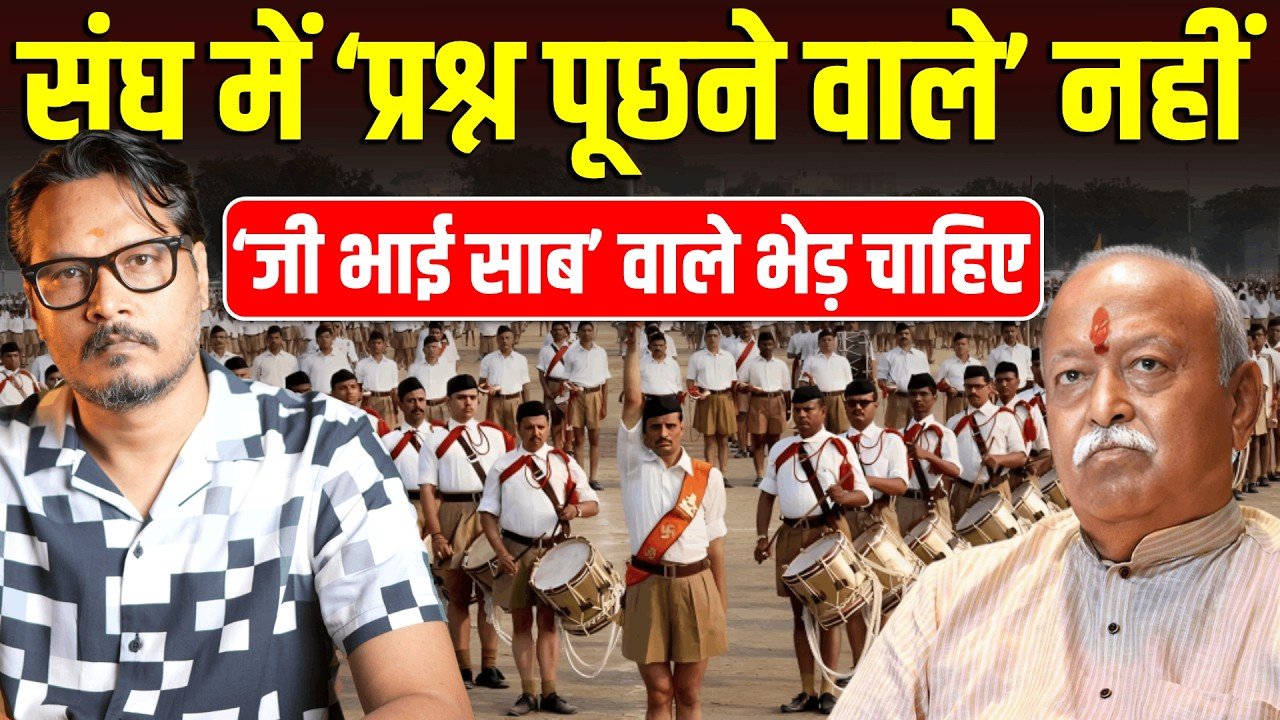
A recent television debate offered a fascinating glimpse into the evolving discourse surrounding the Rashtriya Swayamsevak Sangh (RSS) and its intellectual trajectory. The discussion touched upon fundamental questions regarding the organization’s stance on law, social equality, and its internal dynamics.
The RSS on Law and Social Justice: A Nuanced Stance?
The conversation began with a direct question regarding RSS chief Mohan Bhagwat’s statement that everyone should obey the law. However, the interrogator pressed further: What if a law creates inequality, sparks widespread resentment within a specific community, and prompts calls for its repeal? In such a scenario, what role should the RSS play – adherence to the law, or something more?
An RSS supporter clarified Bhagwat’s position, explaining that while obedience to law is paramount, Bhagwat also acknowledged that if a law needs amendment, the mechanisms for change exist. Those who create laws also possess the power to modify them, especially if society is dissatisfied. From the RSS perspective, the organization’s core tenet is to transcend divisions: “Never speak of caste or creed. Build the organization. Progress on the right path. Do all that is good for the nation.” This ideal, however, seems to clash with the reality of a fragmented society, which the RSS claims it is striving to unite.
The UGC Bill: A Test of Principle?
The discussion then shifted to the University Grants Commission (UGC) bill, prompting three critical questions: Was there excessive injustice occurring? Was the law truly necessary? And if enacted, would it be applied equally and effectively to all?
Initially, an RSS supporter agreed that injustices were indeed prevalent, not just against specific marginalized groups but also affecting women, people with disabilities, and individuals from various regions of India (North, South, and Northeast). This acknowledgement led the interviewer to conclude, perhaps prematurely, that RSS affiliates supported the UGC bill. However, the supporter quickly clarified that his allegiance was to society and the maintenance of law and order, advocating for an end to all discrimination and injustice, a sentiment he believed the RSS also upheld in its quest for social unity.
The anchor pressed for a clearer stance: Was the law good or bad? The RSS supporter, seen as unable to offer a direct answer, reiterated Mohan Bhagwat’s general principle that laws can be made and unmade, a point dismissed by the anchor as basic civics knowledge. This evasiveness highlighted a perceived lack of clear, independent thought from the RSS representative.
Intellectual Decline and the ‘Unquestioning Follower’ Model
A more troubling aspect revealed during the discussion was the alleged decline in intellectual rigor within the RSS. A former volunteer recounted how, despite being well-read and even holding a PhD, he was discouraged from intellectual pursuits by senior members who told him to “throw away books” and simply focus on “connecting people.” This directive extended to avoiding highly educated individuals, who were deemed problematic because they “start asking questions.”
This suggests a deliberate shift towards cultivating an unquestioning following. The anecdote of an ABVP (Akhil Bharatiya Vidyarthi Parishad, the student wing of RSS) member being told to “kill the questioner” or “prepare their minds” when confronted about the organization’s stance on the UGC bill further cemented this impression. The aim, it seemed, was to mold individuals who would accept pronouncements from leaders like Mohan Bhagwat without challenge, treating them as infallible.
The conversation highlighted extreme dedication, with one individual reportedly preserving a pair of slippers worn by Mohan Bhagwat, seeing him almost as a deity. Yet, even such devoted workers are allegedly discouraged from intellectual inquiry, signaling a potential devaluation of critical thought within the Sangh.
The Unwavering Word of Mohan Bhagwat
The discussion underscored the immense authority of Mohan Bhagwat’s statements. “Whatever Mohan Bhagwat states is treated as divine scripture, unalterable and beyond question,” one participant remarked. Every word he utters is meticulously documented and published, often distributed freely at RSS events, implying their status as unquestionable doctrine. The idea that Bhagwat’s words are eternal and unchangeable, even when suggesting that a “wrong law can be changed,” was presented ironically, as if this was a profound revelation only he could offer.
Critiques from Within and Without
The program also brought to light criticisms from both current and former RSS members, including a 65-year veteran who had worked closely with senior leaders like Murli Manohar Joshi. These insiders expressed deep concern that the direction Mohan Bhagwat is taking the RSS is leading not just to the organization’s decline, but to “social destruction.” They even cited instances of RSS members arranging interfaith marriages, dubbing them “Vedic Nikah,” a peculiar fusion that raises questions about ideological consistency.
A social scientist’s critique further elucidated the external perspective: the RSS is a tangible, real-world organization, not an abstract, unassailable entity. Its members are ordinary citizens, and its actions are subject to scrutiny. Dismissing criticism by suggesting critics “form their own organization” is likened to a cruel joke, especially when the RSS itself draws its strength from the very communities it now seems to alienate. The argument was compared to instructing a world-class athlete like Ronaldo how to score goals, highlighting its absurdity.
The Path to Power: “Yes, Brother” and “Ideological Family”
The discussion also delved into the political mechanics surrounding the RSS and its relationship with the BJP. It was suggested that individuals seeking influence within the BJP often look to the RSS for validation. Two key strategies were highlighted: dressing well and demonstrating exaggerated deference. This involved repeatedly saying “Yes, brother” (Ji Bhai Sahab) with a 45-degree bow, and frequently invoking the phrase “we are all part of the same ideological family” (vichar parivar) to signify unity and shared purpose. Such tactics, it was claimed, could pave the way to high positions within the BJP through the RSS’s endorsement.
The article concluded by touching upon various controversial figures and their association with the RSS, questioning the logic behind accepting some while criticizing others for similar past actions or views. This further underscored the perceived inconsistencies and intellectual challenges facing the RSS in contemporary Indian society.