I still remember the first day of school after summer holidays. It was always a very long and gloomy day. In the first period, our class teacher would ask each of us what we did during the break. Some said they visited Shimla, others Kerala. But my answer was always the same: I went to my village in Uttar Pradesh. Back then, like many other things, visiting the village had its own unique charm. Traveling just 80 kilometers felt like entering a different world altogether.
Unlike the dazzling nights of the city, the village nights were pitch black. Tarred roads were replaced by broken, muddy paths, and instead of bulbs, there were oil lamps. Gas stoves made way for clay ovens, water taps for handpumps, and cars for bullock carts. Steel utensils were replaced by clay pots, and the thick, yellow, delicious milk from those clay pots is still a vivid memory.
But as I grew older, the very things I loved about the village started to bother me. That 80-kilometer journey would take three hours of bumping along the roads. Riding a motorbike required constant vigilance, deciding whether to take a shortcut, knowing that route was notorious for theft and robbery.
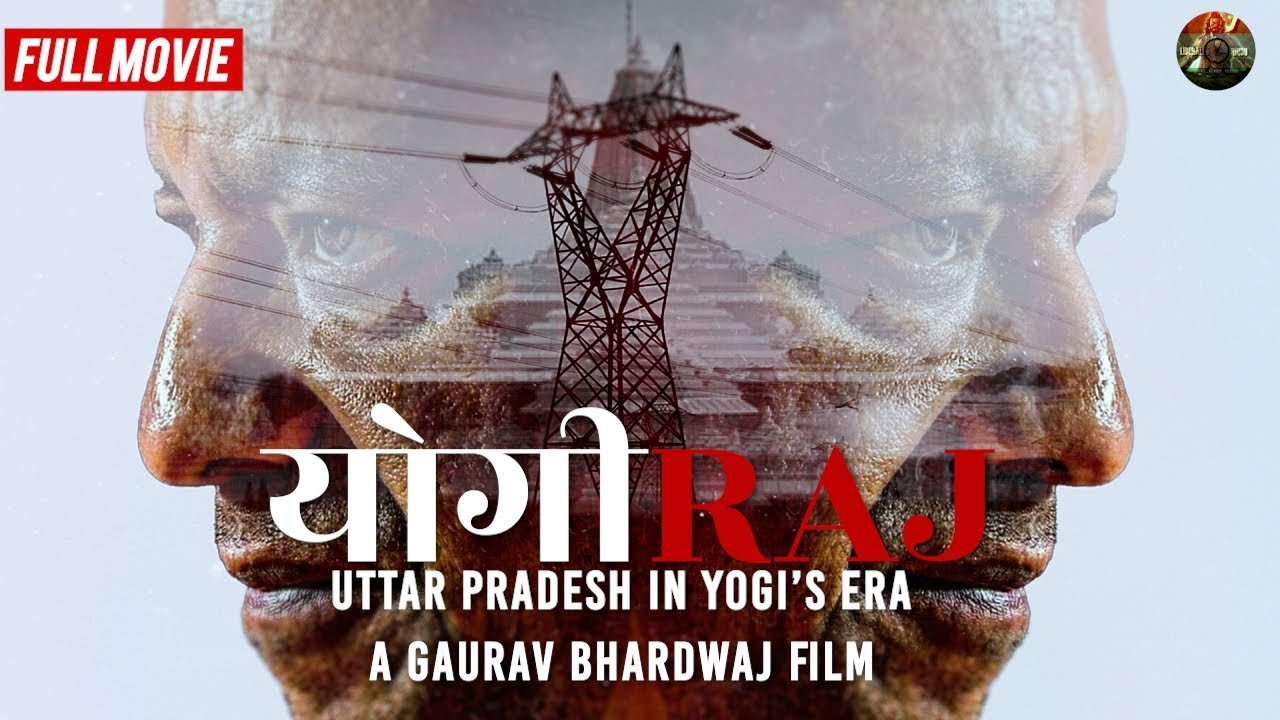
However, in the last four to five years, I have witnessed a remarkable transformation in Uttar Pradesh. Now, I see electricity meters outside every home, and power supply for 18 out of 24 hours. The condition of the roads has vastly improved; the 80-kilometer journey that once took three hours now takes less than half that time. And my family no longer worries about which route I take to the village.
This article is not about my personal feelings, but about what the common person, the average farmer in Western Uttar Pradesh feels. What changes have they experienced in their lives since Yogi Adityanath became Chief Minister? The bottom line is: are the people of Western Uttar Pradesh happy with their saffron-clad Chief Minister?
A New Era of Law and Order: Ensuring Safety for All
For any citizen, security is paramount. Previous governments were plagued by rampant crime, including loot, robbery, and theft. Many believe that Uttar Pradesh is now truly safe. Farmers, for instance, used to guard their valuable livestock (worth 70-80 thousand rupees each) in the jungles, where they were vulnerable to thieves who would even steal their motor starters. Farmers were caught between protecting their homes and guarding their fields. But in the last five years under the BJP government, people feel safer at home and in the fields. Farmers can now leave their livestock in their homes and are not afraid to travel to the jungle, even during festivals like Holi and Diwali, without fear of robbery. The law and order situation, under Yogi Adityanath, has surpassed even the Kalyan Singh government’s standards. People are not afraid to let their children aim for high positions, knowing that the Chief Minister himself is dedicated and free from family ties, unlike some other politicians whose families have accumulated vast wealth. The Chief Minister’s honesty is a significant factor.
Curbing Criminals: A Strong Stance
Many recall the previous government’s approach to crime. One individual lamented the Bulandshahr highway incident where a mother and daughter were raped, and how leniently it was handled. Today, criminals either flee the state or face consequences. This government has not patronized criminals. In contrast, during previous regimes, it felt like criminals were protected. Police now work freely, without political interference, ensuring law and order is maintained without compromise. Minor incidents of teasing or crime are now met with swift justice, leading to arrests and punishment, unlike before where perpetrators could easily secure bail.
Powering Progress: Electricity and Infrastructure
Before Yogi Adityanath’s five-year term, villages received electricity for only four to five hours a day, if at all. Power supply was a major election issue, with politicians promising better provision. Today, there’s abundant electricity. Previously, even gas cylinders were hard to obtain; people would struggle for hours, sometimes even dying in queues. Now, gas is readily available at home.
Efficient Public Services: The Transformer Story
A farmer vividly recounts the hassle of getting a burnt transformer replaced under previous administrations. It involved endless trips, begging officials, pooling money from neighbors for bribes to junior engineers and lineymen, and even paying for the transformer’s transport. The entire process was cumbersome and exploitative. Now, if a farmer’s transformer burns out, they can simply dial 1912 from anywhere – home, field, or a relative’s house. Their complaint is registered within a minute, they receive an SMS, and within 48 hours, a new transformer is installed at their doorstep. This efficient system, many believe, is a first in 50 years.
Healthcare Revitalization: Access and Trust
A person shares a personal experience from four or five years ago when he suffered from typhoid. A private doctor prescribed tests, but at the government dispensary, the doctor was absent, and a compounder merely gave basic medicine. He had to pay 500 rupees for proper typhoid medication privately. Recently, his daughter fell ill. At a government hospital, a capable doctor named S.K. Jain examined her, prescribed medicines for anemia, including syrups and other treatments. He noted that today’s government hospitals are equipped with ultrasound, X-ray, sugar and blood pressure testing machines, and all related medicines are available. Previously, only 10-15% of people visited government hospitals; now, 200-250 people receive treatment daily. The doctors are good, machines are operational, and generators ensure power even if the electricity goes out. This is a stark contrast to previous governments where X-ray machines were often broken or unusable due to power cuts. People now feel confident and eager to visit government hospitals for quality facilities and medicines.
Addressing Farmer Concerns: Challenges and Government Initiatives
The Stray Cattle Dilemma
One of the biggest concerns for farmers is the problem of stray cattle, which damage crops. Farmers cannot even stay in their fields at night. While acknowledging the severity of the issue, some also point out that the problem isn’t entirely the government’s fault, as farmers often abandon cattle once they stop producing milk. The government has taken steps by locating unused land from past land consolidations to build cow shelters. Despite this, some farmers still prefer to let their cattle roam rather than taking them to shelters. There’s a call for stronger guidance or incentives to encourage farmers to use the shelters. The Chief Minister’s government does offer 900 rupees per month per cow to farmers who care for them at home, along with opening numerous cow shelters. However, the challenge lies in ensuring funds reach the ground level, as block-level employees sometimes falsely report that there are no stray animals. Farmers feel immense distress over crop destruction by these animals, leading some to even contemplate suicide.
Chief Minister Yogi Adityanath acknowledged the stray cattle issue, stating it arose because previous governments allowed cattle to be taken to slaughterhouses or smuggled to Bangladesh. His government has strictly curbed this and implemented a management plan. They have opened state-funded cow shelters in every district, caring for approximately 7 lakh cattle. Farmers who keep cattle are provided 900 rupees per month per animal, totaling 3600 rupees for four animals. Veterinary doctors conduct monthly check-ups. Furthermore, the government is linking cow shelters with CNG production and gas plants, aiming to convert cattle waste into fuel and fertilizer, thereby solving the problem and turning it into a resource.
Electricity Bills for Agriculture
Farmers express concern about increased electricity bills for agricultural purposes, particularly for tube wells. They argue that bills have tripled, from 600 rupees to 1800 rupees monthly, despite government claims of doubling farmer income. They believe electricity should be free for farmers or heavily subsidized. However, the government counters that bills have increased not because rates are higher, but because farmers are now receiving 15-16 hours of consistent power for irrigation, allowing them to use more electricity. The rates for farmers’ tube well meters have been halved, and new schemes are being introduced. The government is encouraging farmers to install solar panels for free electricity, offering to disconnect grid connections for those who do, and assisting with maintenance and operation. This scheme is expected to launch soon with central government support.
Sugarcane Payments: A Lingering Issue
Farmers remind Yogi Adityanath of his promise to clear sugarcane payments within 14 days. They state that some mills have only paid up to January, and they doubt the government’s ability to fulfill its promise completely. They demand timely payments, with interest, if delayed beyond 14 days, as per the manifesto. The government claims to have made substantial payments of 1.56 lakh crore rupees to sugarcane farmers from 2003-2014, and current season payments are 70% complete. They acknowledge issues with three groups but are pressuring them. All sugar mills have remained operational, and will continue until all sugarcane is harvested.
Governance Without Discrimination: A Core Principle
The government aims to provide development, good governance, and a secure environment to over 58,000 gram panchayats across the state without discrimination. Prime Minister Modi’s vision of empowering gram panchayats as centers of development is being realized through improved roads, electricity, and village secretariats. The state and central governments are working together to provide housing, toilets, electricity to unpowered villages, and ration for the poor, while also establishing a secure environment in these areas. Many point out that in previous governments, electricity was supplied preferentially to certain communities, and only burial grounds received boundary walls, while cremation grounds were ignored. Now, there is no discrimination in electricity supply, with all areas receiving 18-20 hours of power. This focus on inclusive development, without appeasement or preferential treatment, is cited as a major reason for the current government’s popularity.
Vision for the Future: Trust and Prosperity
Beyond specific policies, there’s a strong sentiment of trust in Yogi Adityanath. Calls for a population control law are also voiced, believing it’s crucial for the country’s future. The public perceives Yogi Adityanath as honest, dedicated, and hardworking. Compared to past leaders, who were often seen as less active, Yogi Adityanath is viewed as working tirelessly for the people. People, including women, youth, and elders, across villages and cities, express faith in the leadership of Yogi and Modi, believing it secures the future of their children and the nation. Western Uttar Pradesh, they believe, is entering a new era of security and prosperity.