Welcome, everyone! Today, we delve into a fascinating, albeit uncomfortable, aspect of the India-Pakistan cricket rivalry: its profound economic impact. While often viewed through the lens of national pride and fierce competition, beneath the surface lies a complex financial ecosystem where one team’s perceived humiliation translates into staggering profits for others.
The question that has been stirring many minds is: why is the India-Pakistan cricket match so indispensable, even if one side seems reluctant to participate? The answer, as we will explore, predominantly boils down to money, and a lot of it.
The Golden Goose: Unpacking the Revenue Machine
Consider the recent India-Pakistan match, a contest that many describe as a one-sided affair, resulting in significant embarrassment for Pakistan’s players and its cricket board. Yet, this very event was a colossal financial success. The sheer numbers are astounding. For a single match, the advertising rate was an astonishing INR 7 million (approximately $84,000 USD) for just ten seconds of airtime. With 55 minutes of ad slots available during the entire game, the broadcaster raked in an estimated INR 231 crore (approximately $27.7 million USD) in ad revenue alone. This figure doesn’t even include title sponsorships or other promotional ventures.
This immense revenue stream is precisely why a match between these two nations is not just desirable but essential for broadcasters. Having invested a colossal $3 billion for broadcasting rights, these companies are not in the business of charity; they are shrewd businessmen seeking a return on their investment. If a match were canceled, the broadcaster would undoubtedly pursue legal action against the ICC for damages, highlighting the non-negotiable financial stakes involved.
Pakistan’s Unwilling “Cash Cow”
In business terms, particularly through frameworks like the BCG matrix, the India-Pakistan match functions as a definitive “Cash Cow.” Despite the on-field disappointment for Pakistan, this humiliation often proves to be a lucrative asset for a select group of wealthy stakeholders. Intriguingly, 80-90% of the revenue generated from these encounters ultimately flows into Indian pockets – benefiting broadcasters, the BCCI, and the Indian government. This dynamic contradicts Pakistan’s frequent pleas for a larger share of ICC revenues, as their financial contribution to the global cricket economy, particularly through bilateral series, remains marginal.
The International Cricket Council (ICC) employs a “Four-Pillar Distribution Formula” to determine revenue sharing, taking into account factors such as a nation’s cricketing history and commercial contributions. Pakistan’s struggling domestic cricket and lack of interest in their bilateral series means their commercial contribution is minimal. Broadcasters often withdraw from covering Pakistan’s bilateral games against teams like Australia because of a lack of advertising interest. This underscores the stark reality: Pakistan’s cricketing existence, especially financially, heavily depends on the India-Pakistan fixtures. These matches, particularly in ICC tournaments, are their primary source of significant income.
Politics, Diplomacy, and the “No Handshake” Stance
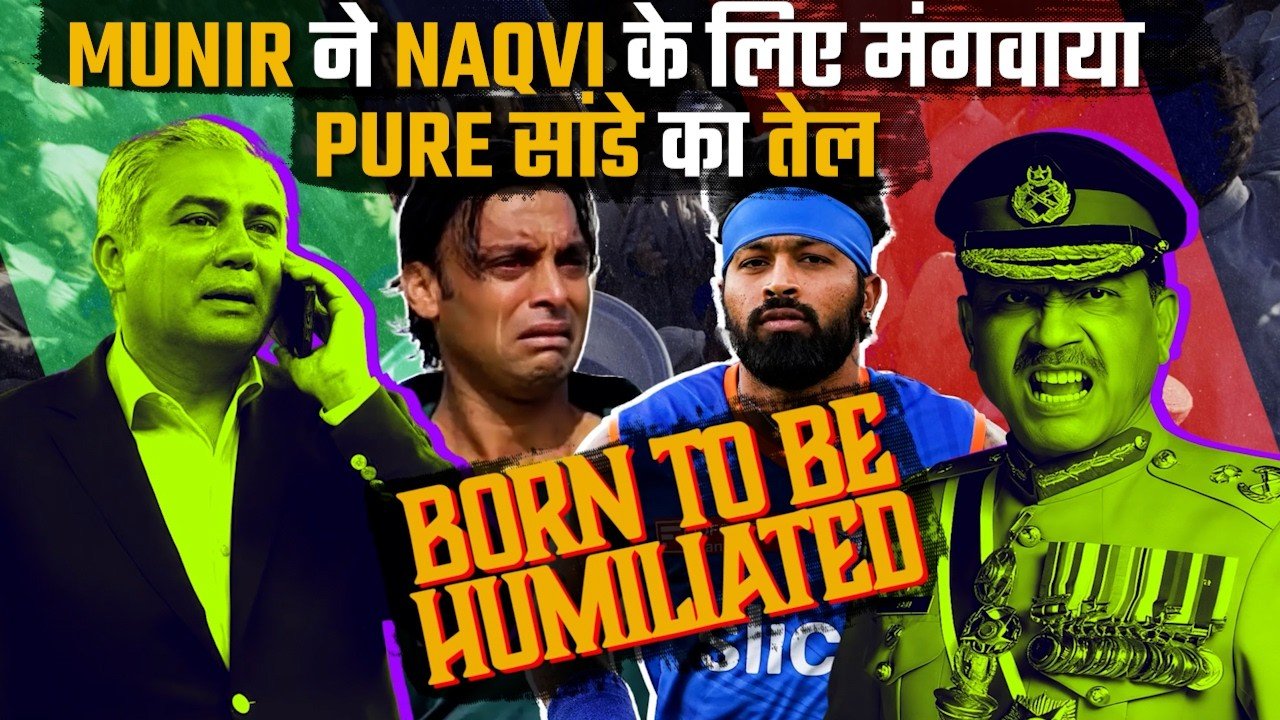
The political landscape further complicates this cricketing rivalry. Individuals like Mohsin Naqvi, the Chairman of the Pakistan Cricket Board (PCB), illustrate the deep intertwining of politics and sport. Naqvi’s appointment came as a reward for his political actions, not cricketing acumen. This connection highlights how the PCB operates under political directives, often driven by financial imperatives. Despite strong public sentiment in India to boycott matches with Pakistan due to terrorism concerns, the economic realities often dictate otherwise.
The Indian public’s diminishing interest in India-Pakistan matches was evident during the Asia Cup, where tickets remained unsold – a rarity for such a high-profile clash. This dwindling interest, fueled by a collective refusal to engage with a nation perceived to sponsor terrorism, prompted a significant shift. Indian diplomats have, for years, refrained from shaking hands with Pakistani counterparts, a policy that naturally extended to cricketers on the field. This decision by Indian players not to shake hands post-match was less about personal animosity and more about aligning with national sentiment and avoiding public backlash, recognizing the profound negative sentiment towards playing Pakistan in India.
This official stance from India has unfortunately led to misguided criticism from some Indian commentators, such as Harsha Bhogle and Sanjay Manjrekar, who equate India’s stance with “politics” entering cricket. This perspective, however, fails to distinguish between diplomatic politics and the grave issue of terrorism. To draw a parallel, playing against a country with whom there are trade disputes is vastly different from playing against one that has been implicated in terror attacks on your soil. India’s position is not about petty politics but a matter of national security and the deep emotional scars left by terrorism.
The silence of the ICC on the treatment of cricketing legends like Imran Khan, an ICC Hall of Famer, further highlights the selective engagement with political issues. While other global sporting bodies often speak out against injustices faced by their members, the ICC’s quietude raises questions about the very meaning and purpose of its Hall of Fame.
The Humiliation Economy: From YouTubers to National Boards
The phenomenon of profiting from humiliation extends beyond official channels. Pakistani cricket YouTubers and media personalities have long understood that critical or negative content about Pakistan’s performance, especially against India, garners significantly more views and revenue. This “humiliation economy” incentivizes a downward spiral where poor performance is inadvertently rewarded through increased engagement.
On the field, the aggression of players like Hardik Pandya, who famously demanded the first over against Pakistan in a recent match, showcases a raw, unapologetic commitment to competitive cricket, contrasting sharply with Pakistan’s perceived desperation for financial survival through the rivalry. Pandya’s intense focus and demonstrable improvement in speed highlight a professional attitude focused on performance, not external narratives or financial gain.
A Call for Change: Beyond the Cash Cow
Ultimately, the transcript makes a passionate plea to the Indian government to reconsider playing against Pakistan, especially in bilateral series. While acknowledging the financial implications for broadcasters like Jio (whose entire entertainment division accounts for less than 2% of Reliance’s total revenue, making a single match’s cancellation negligible), the argument is for prioritizing national integrity and finding alternative revenue streams.
The suggestion is to foster other rivalries and tri-nation or quad-nation tournaments involving powerhouses like South Africa, England, New Zealand, and Australia. By investing in creative marketing and promoting these genuine cricketing contests, the sport can evolve beyond its current, politically charged dependency. The call is clear: end the cycle of humiliation and financial dependence, and let cricket return to being a game driven by skill, sportsmanship, and authentic rivalry, rather than a desperate lifeline.